
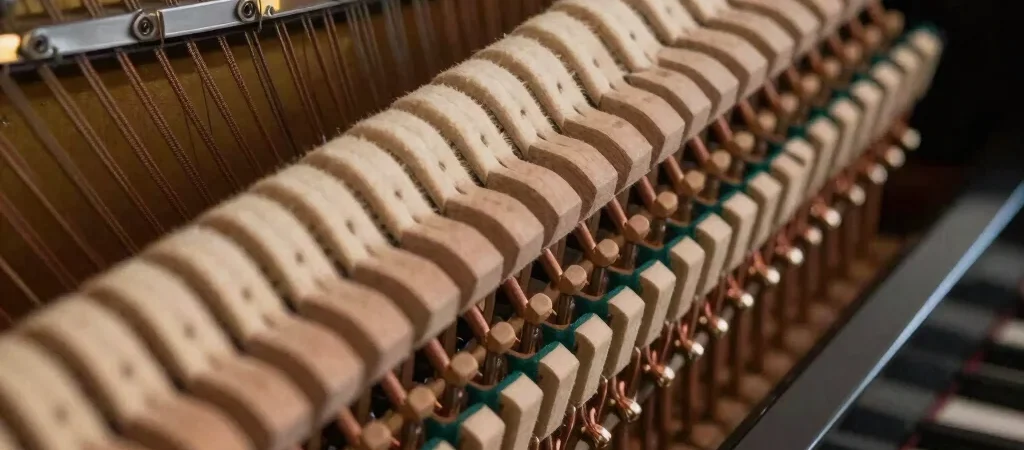
When a pianist presses a key, the sensation beneath their fingertips is not merely resistance but a dynamic transfer of mechanical energy. An acoustic upright piano contains thousands of moving parts crafted from hornbeam wood, felt, leather, and steel, all operating without digital intervention. This tactile craftsmanship defines the instrument's dynamic range and organic responsiveness. Understanding how this intricate assembly functions enables musicians to choose an instrument that matches their physical playing style for decades.
The Physics of Key Resistance and Escapement
The mechanical journey begins at the key lever, which acts as a fulcrum balancing weight and momentum. As the key descends, the jack pushes the hammer assembly toward the string until the escapement mechanism releases it moments before contact. This tiny fraction of free movement prevents the hammer from resting against the vibrating string. Superior action design ensures this transition feels instantaneous, granting the performer complete control over delicate pianissimo passages and thunderous fortissimo chords alike.
Materials and Dampers in Acoustic Sound Production
Material selection plays an essential role in preserving acoustic timbre across decades of deliberate practice. High-grade wool felt pressed around solid hardwood hammer cores determines whether an instrument yields a bright, shimmering tone or a dark, mellow voice. Meanwhile, felt dampers must disengage cleanly from the strings the instant a key is depressed and return with silent precision when released. Inspecting damper alignment and hammer felts reveals an instrument's manufacturing heritage and long-term acoustic potential.
Evaluating Mechanical Response Before Selection
When evaluating an upright piano, consistent key resistance across all eighty-eight keys is paramount. Play slowly through chromatic scales to feel for excessive friction or uneven weight distribution between the bass and treble registers. A well-regulated action responds predictably to subtle variations in finger velocity, rewarding the player with expressive nuances. Prioritizing mechanical precision over aesthetic casing guarantees a deeply satisfying relationship with your instrument.